Home › Timber fencing
Timber Fencing in Christchurch
Paling, lapped, slat and picket fences in treated pine, built to stand up to a nor'wester and to look right from both sides of the boundary.
- Site visit and a written, itemised quote
- H4 posts in concrete, H3.2 rails and palings
- Old fence taken down and carted away
Get a free quote
Tell us about the job. We reply within one working day.
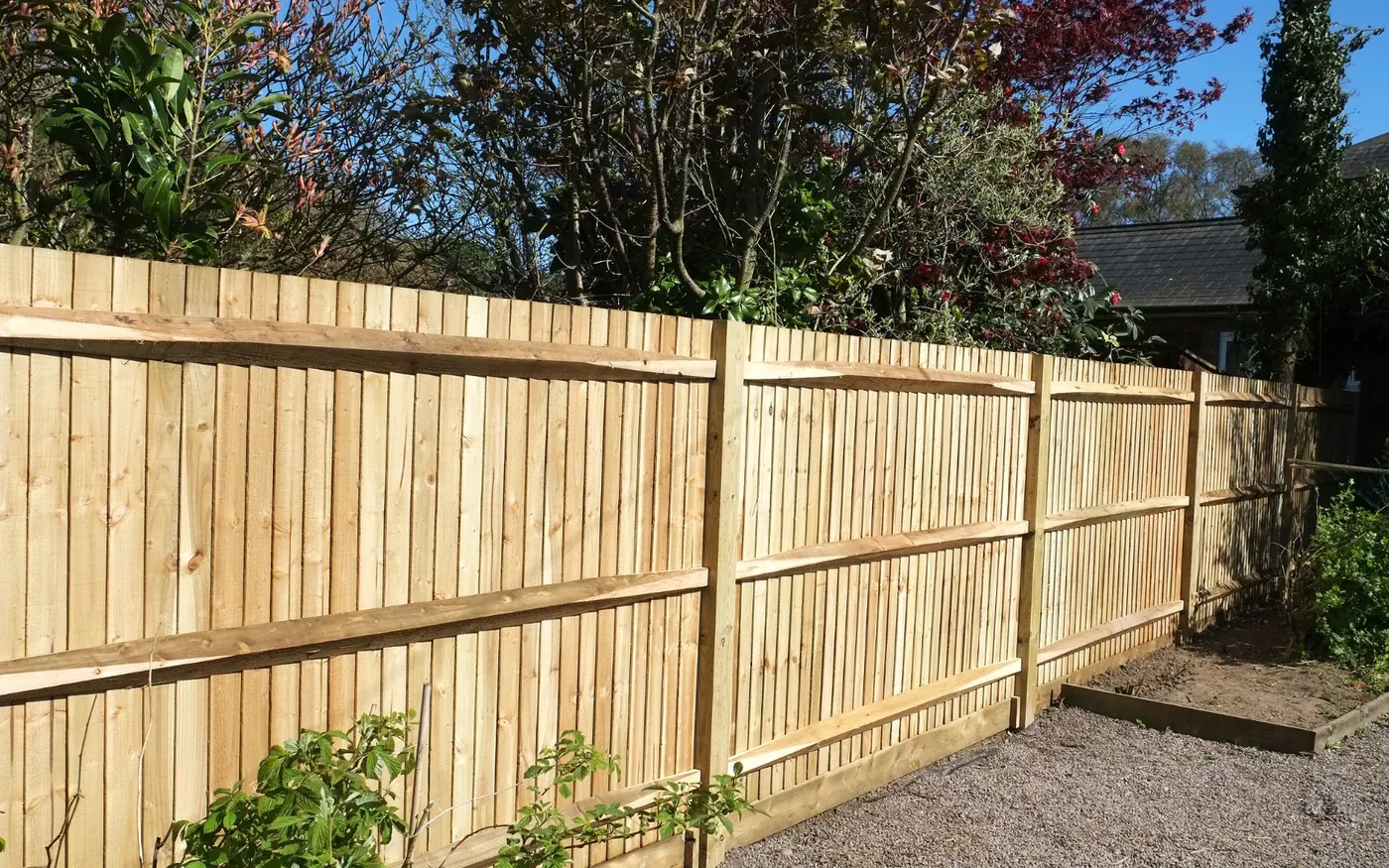
Most boundaries in Christchurch are fenced in timber, and most of those fences are 1.8 metre paling fences: square posts in concrete, three rails, and rough-sawn palings nailed to one side. It is the cheapest way to get full privacy, it suits nearly every house, and a fencer can build 20 to 30 metres of it in two or three days.
What separates a fence that lasts from one that leans after the first big wind is mostly out of sight. Post depth, post spacing, the treatment grade of the timber and the fixings matter more than the paling pattern, so those are the things the written quote should spell out.
How a paling fence is built
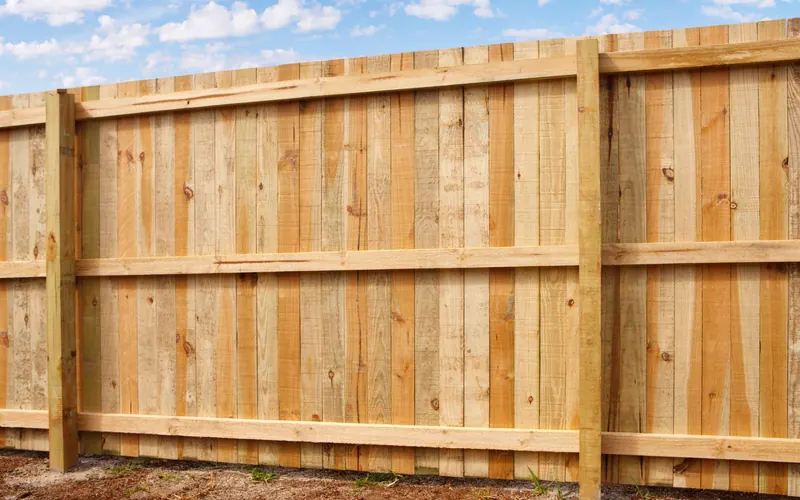
- Line and levels. The boundary is found from the survey pegs, or agreed with the neighbour where the pegs are gone. A string line sets the top of the fence.
- Posts. H4 treated 100 x 100 mm posts go in at about 2.4 metre centres, at least 600 mm into the ground and concreted. In exposed spots the posts go deeper and closer together. See the guide to post depth and spacing.
- Rails. Three H3.2 rails for a 1.8 metre fence, checked into the posts or fixed to the face with galvanised nails or screws.
- Palings. Rough-sawn 150 mm palings are nailed on, butted tight or overlapped, and kept clear of the soil so the ends do not sit wet.
- Capping and finish. A capping rail sheds water off the end grain and stiffens the top. The fence can be left to silver off, or stained once the timber has dried.
Styles, and where each one suits
- Standard butted paling. The lowest price for full privacy. Palings shrink as they dry over the first summer, so expect narrow gaps to open.
- Lapped and capped. Palings overlap, so there are no gaps even after a dry nor'west summer. The usual choice between neighbours who both want a finished look.
- Hit and miss. Palings alternate on each side of the rails. It looks the same from both sides and lets some wind through, which helps on exposed boundaries.
- Horizontal slat. Dressed boards run level between posts with a small gap. A modern look for front boundaries and courtyards, and the dearest of the timber options.
- Picket and post-and-rail. Low front fences for villas and bungalows, and open rail fences for lifestyle blocks.
The paling fence guide compares the styles, and the wind guide covers what holds up on an exposed section.
Slopes, steps and fences on retaining walls
On the flat, a fence runs level. On a slope it either steps down in level bays or rakes to follow the ground, and the choice changes how much timber is cut and how the bottom gap is closed off for a dog.
Where the two sections sit at different levels, a low timber retaining wall and the fence are often built together, with the fence posts carried down through the wall. That works well, with two cautions. The fence height is usually measured from the lower side, so a full-height fence on a wall can go past what the district plan allows. And a wall holding back more than 1.5 metres of ground, or carrying a driveway or building, needs an engineer and its own building consent. The fencer will tell you at the site visit which side of those lines your job sits on.
Timber fence prices in Christchurch
| Item | Guide price |
|---|---|
| Standard paling fence, 1.8 m | $180 to $280 per metre |
| Lapped and capped paling fence, 1.8 m | $230 to $340 per metre |
| Horizontal slat fence | $320 to $520 per metre |
| Picket fence, 1.0 to 1.2 m | $180 to $300 per metre |
| Post and rail, three rails | $60 to $120 per metre |
| Removing the old fence | $20 to $45 per metre |
Guide prices with materials and labour included. The firm figure is the one in your written quote after the site visit.
Questions about timber fencing
How much does a timber fence cost in Christchurch?
As a guide, $180 to $280 per metre for a standard 1.8 metre paling fence, built, and $230 to $340 for lapped and capped. A 30 metre boundary at the standard rate is roughly $5,400 to $8,400. Stony ground, slopes, tight access and removing an old fence all move the figure.
Does it need a building consent?
No building consent is needed for a fence up to 2.5 metres high. District plan rules and subdivision covenants are separate and often limit front fence heights, so confirm with Christchurch City Council, Selwyn District Council or Waimakariri District Council before you settle on a height. Pool barriers are the exception: they normally need a consent.
How long does a timber fence last?
A paling fence in correctly treated pine usually gives 15 to 25 years, and longer if it is capped and kept clear of soil. Posts go first, at ground level. H4 posts and concrete shaped to shed water away from the timber make the biggest difference.
Does my neighbour have to pay half?
For an adequate fence on a shared boundary, generally yes, under the Fencing Act 1978. The Act sets out a written notice process, and it is best to agree in writing before any work starts. For a disagreement, read the Act or get advice.
Can you match the fence I already have?
Usually. Paling widths and heights are fairly standard, so a new run can be built to line up with an existing one. New timber will be paler until it weathers or is stained.
Who actually does the work?
An independent Christchurch fencing company that we partner with. They visit the site, give you the written quote and do the work under their own name.
From enquiry to finished job.
Send the details
Use the form or ring. The suburb, a rough number of metres and the style you have in mind will do.
The fencer visits
They measure the boundary, find the pegs, check the ground and the access, and look at what has to come out.
Quote in writing
Fence, gates, removal and extras each on their own line, with a start date. You are free to say no.
Built and checked
The same crew sets the posts and hangs the gates. You walk the fence line with them before the final bill.
Get a quote for timber fencing
Fill in the form and we will line up a free site visit, followed by a written quote with each cost on its own line. Prefer to talk? Ring us.
Request a free quote
Tell us about the job. We reply within one working day.