In short
- Timber paling is the lowest cost at $180 to $280 per metre.
- Colorsteel-style steel panels cost $230 to $380 and need no staining.
- Aluminium slat costs $380 to $700, lasts longest and suits coastal sites.
- Many sections use two: one material at the front, another down the sides.
For most New Zealand homes the choice of fence comes down to three materials: treated timber, pre-painted steel panels and powder-coated aluminium. Timber is the cheapest to build. Steel panels cost a little more and need almost no upkeep. Aluminium costs the most and lasts the longest. This guide compares them so you can match the fence to the boundary.
A note on names. "Colorsteel" is a brand of pre-painted steel made in New Zealand, and people use the word for steel panel fencing in general, much as other brand names have become the everyday word for a product. Fences sold under several names use similar pre-painted steel sheet in a post and rail frame.
Side by side
| Timber paling | Steel panel | Aluminium slat | |
|---|---|---|---|
| Guide price per metre, 1.8 m | $180 to $280 | $230 to $380 | $380 to $700 |
| Expected life | 15 to 25 years | 25 years or more | 30 years or more |
| Upkeep | Optional stain every few years. Renail loose palings | Wash down now and then | Wash down now and then |
| Privacy | Full. Small gaps if butted | Full | Adjustable by slat gap |
| Wind | Solid unless hit and miss | Solid | Lets air through |
| Looks the same both sides | Only lapped or hit and miss | Yes | Yes |
| Near the sea | Good with stainless fixings | Needs a coastal-grade coating | Best choice |
| Easy to repair | Very | Panels can be swapped | Slats can be swapped |
Guide prices per metre of fence, built, materials and labour, on a flat section with reasonable access. A written quote after a site visit is the only firm figure.
Timber
A treated pine paling fence is the default for good reasons. It is the lowest cost per metre for full privacy. Any fencer can build or repair one, the parts are in every hardware store, and it can be made any height, stepped down a slope or shaped around a tree. It looks at home against almost any house.
The trade-offs are life and upkeep. Timber moves, palings shrink and gap, and posts eventually rot at ground level. A stain is optional, and most paling fences are left to go grey.
Choose timber when cost matters most, when you are sharing with a neighbour who wants the standard fence, on sloping or awkward boundaries, and around older houses. See the paling fence guide and timber fencing.
Colorsteel-style steel panels
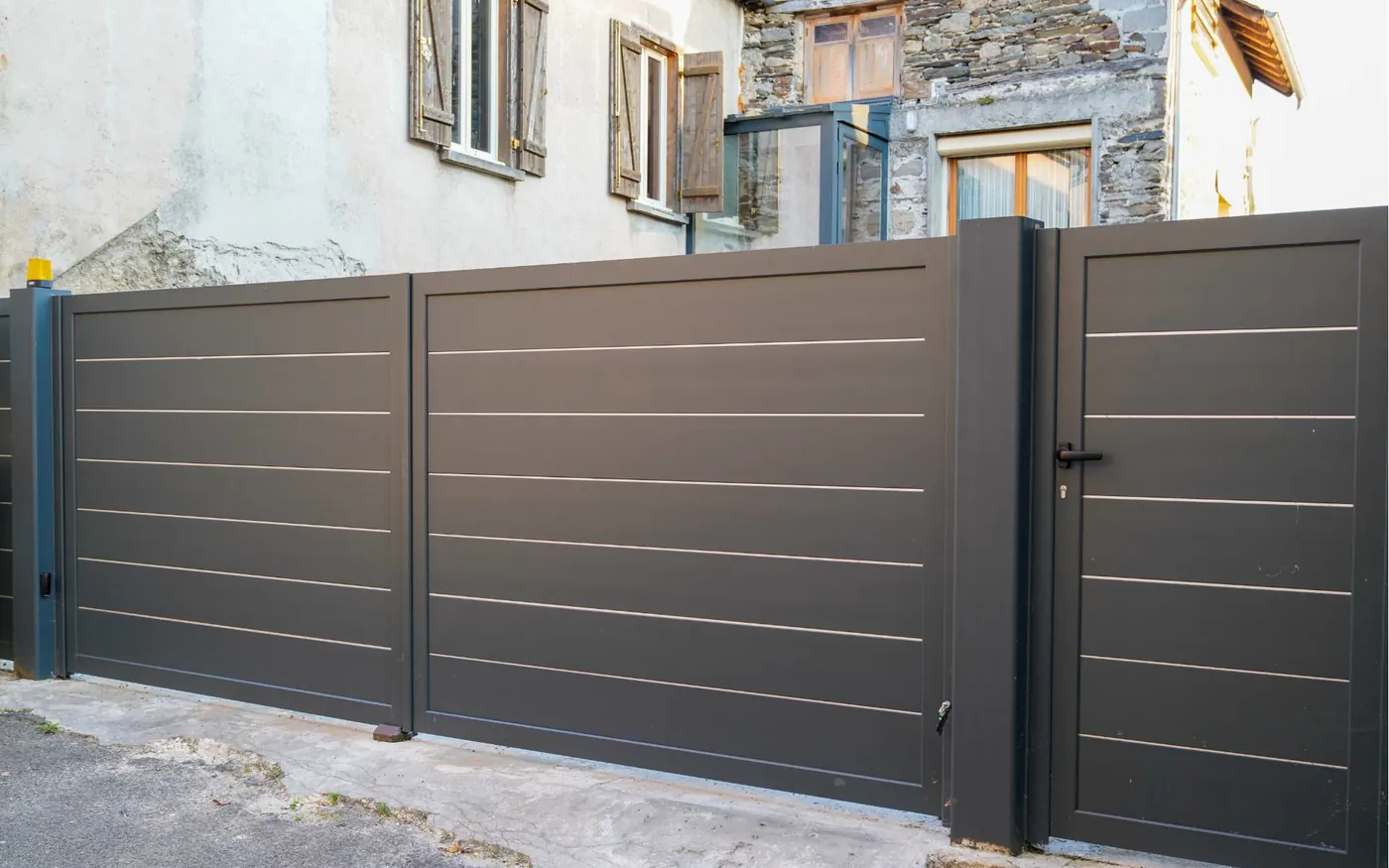
Steel panel fences use ribbed or flat pre-painted sheets held in a frame of steel posts and rails. The result is a flat, uniform wall of colour, the same on both sides, in a range that includes the dark greys, blacks and off-whites used on roofs and joinery.
Their strengths are privacy and low upkeep. There are no gaps and nothing to stain, and the cost is not far above a lapped timber fence.
They have weaknesses as well. The fence is fully solid, so it takes the full force of the wind and the posts and footings must be sized for it. A dent from a ball or a ride-on mower stays, and near the coast the coating grade matters. The panels come in fixed widths, so steep slopes need stepping.
Choose steel panels when you want full privacy with no painting and the boundary is fairly straight and level.
Aluminium
Aluminium fencing is made from extruded slats, louvres or tubular bars, powder coated and fixed between aluminium posts. It is light, it will not rust, and the finish lasts for decades.
Slat fences can be tuned. Tight spacing gives privacy, and wider spacing gives light and air. Louvres block the view at eye level while letting wind through. Tubular panels make a tidy open fence for pools and front gardens. Because air passes through most of these, they load their posts less than a solid fence does.
The drawback is price, roughly double that of timber for a full-height slat fence, and a crisp modern look that is not always right beside a villa.
Choose aluminium when the fence is at the front of a newer home, in salt air, around a pool or anywhere you want a long life with no upkeep. See metal fencing.
How each handles Canterbury conditions
Wind
Solid timber and steel panel fences both act as sails in a nor'wester. They need deeper posts at closer centres on exposed boundaries. Aluminium slats and hit-and-miss timber let air through. See the wind guide.
Dry summers and frost
Timber shrinks and swells with the seasons. Metal does not, though dark colours get hot in full sun. None of the three is troubled by frost once built.
Salt
In Sumner, Redcliffs, New Brighton, Southshore and the beach settlements north of the Waimakariri, aluminium is the safe choice. Timber does well with stainless fixings. Steel panels need a coating grade made for coastal sites and a rinse where rain does not wash them.
Noise and privacy
For blocking sound, mass and a lack of gaps are what count. A lapped timber fence or a steel panel fence with no gap at the bottom does more than a slatted one, though no ordinary fence makes a busy road quiet. All three can give full privacy.
Sharing the cost with a neighbour
Under the Fencing Act 1978, neighbours generally share the cost of an adequate fence, and a standard timber paling fence usually meets that description. If you want steel or aluminium on a shared boundary, the neighbour may agree to split it. Otherwise, a fair approach is that they pay half of what a paling fence would cost and you pay the rest. Agree in writing first. The Fencing Act guide explains the process.
What it adds up to
| 30 metres of fence | Guide total |
|---|---|
| Standard timber paling | $5,400 to $8,400 |
| Lapped and capped timber | $6,900 to $10,200 |
| Colorsteel-style steel panel | $6,900 to $11,400 |
| Aluminium slat | $11,400 to $21,000 |
Over thirty years a timber fence will probably be replaced once. A steel or aluminium fence should still be standing, so whole-of-life costs are closer than the build prices suggest.
Mixing materials
You do not have to pick one. A common and sensible plan for a Christchurch section is aluminium slat or a low picket across the front, where it is seen, timber paling down the sides and back, where it is shared and standard, and pool-style aluminium or glass around a pool. Check any covenant on your title first, since many newer subdivisions list the materials and colours allowed. Then use the fence cost calculator to price each run.
Common questions
Is Colorsteel fencing cheaper than timber?
No. As a guide, a Colorsteel-style panel fence costs $230 to $380 per metre against $180 to $280 for standard timber paling. It can work out similar over its life, because it lasts longer and needs no staining.
How long does a Colorsteel fence last?
Twenty-five years or more inland with an occasional wash. In coastal areas, the right coating grade and regular rinsing are needed to reach that.
Is aluminium fencing worth the extra cost?
For front boundaries, coastal sites and pools it usually is: it does not rust or rot and keeps its finish for decades. For a long shared back boundary, timber or steel panel is better value.
Which fence material is best in strong wind?
Slatted aluminium or hit-and-miss timber, because some wind passes through. Solid timber and steel panel fences need deeper, closer posts to cope.