In short
- Most fenced sections need two gates: one each side of the house, or one side gate plus a driveway gate.
- A back yard should have a second way out.
- Make at least one gate 1.2 m wide or more.
- Pool gates have their own rules and must self-close and self-latch.
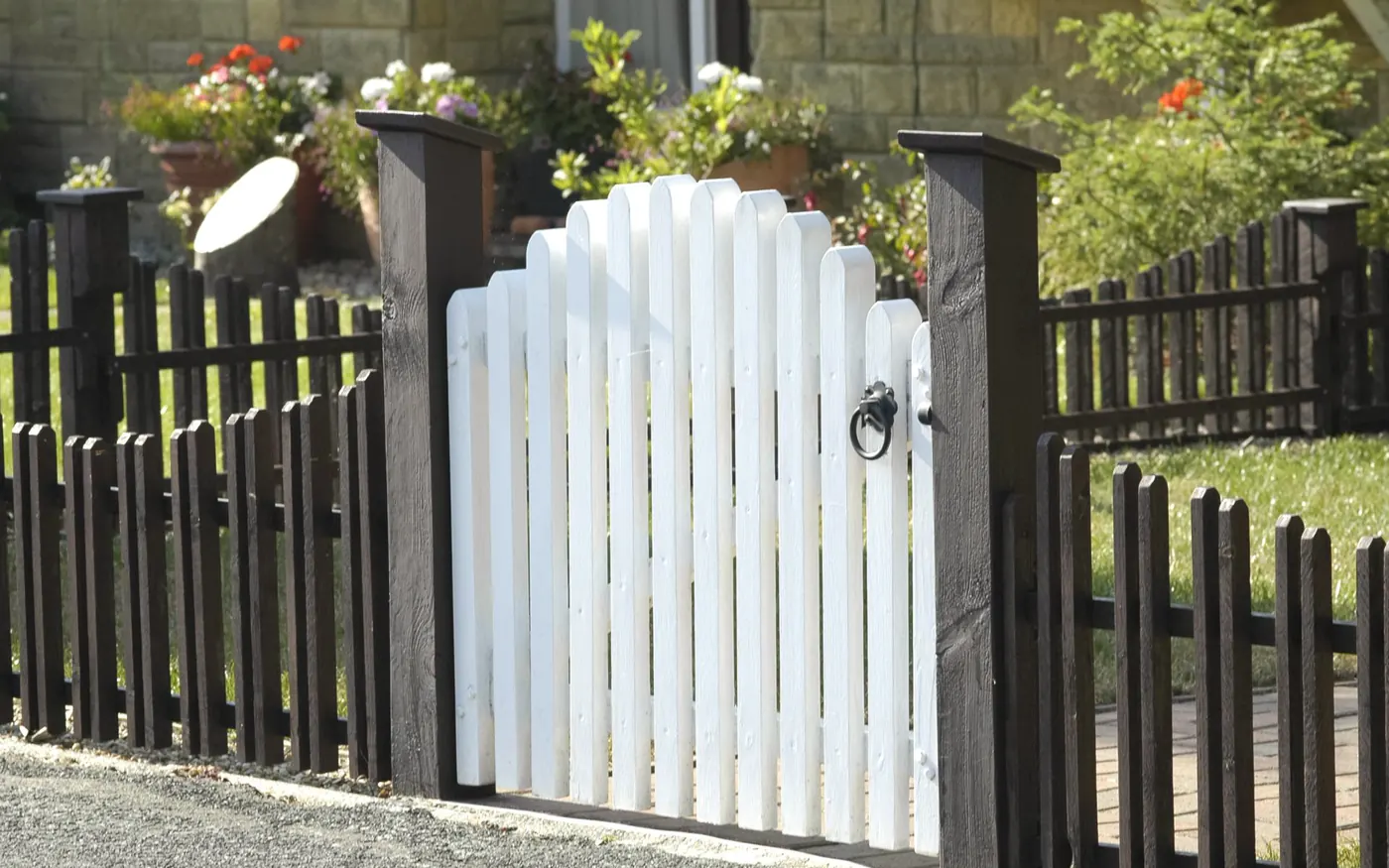
Most fenced residential sections in New Zealand work best with two gates: a side gate on each side of the house, or one side gate and a gate across the driveway. One gate is the minimum for getting into the back yard. A second gives you another way out, and that is what makes the difference in an emergency and on rubbish day.
Start with what has to get through
Walk around the section and list everything that moves between the front and the back.
- People. You, visitors, the meter reader, tradespeople with tools.
- Wheelie bins. Three of them, every week, by the shortest route to the kerb.
- The mower, a wheelbarrow, bikes.
- Bigger things, now and then. A trailer of firewood or compost, a small digger for landscaping, a spa pool, a garden shed.
- Things that must not get through. The dog. Small children. Anyone uninvited.
That list decides how many gates you need, and how wide each one should be.
How wide should each gate be?
| What it is for | Clear opening | Notes |
|---|---|---|
| People only | 900 mm | The minimum that feels comfortable |
| Bins, mower, wheelbarrow | 1.0 to 1.2 m | The sensible size for a side gate |
| Ride-on mower or garden trailer | 1.5 to 1.8 m | Often a gate and a half: one wide leaf and a narrow one |
| Car, ute or small digger | 3.0 to 3.6 m | A pair of gates, or a lift-out fence panel |
| Double driveway | 4.8 to 6.0 m | Double swing gates or a sliding gate |
If you can only afford one generous gate, make it the side gate on the wider side of the house. The cost difference between a 900 mm gate and a 1.2 metre gate is small. The cost of pulling out a fence panel because the new spa will not fit is not.
Common layouts
Standard suburban section
Fence returns run from each side of the house to the side boundaries, closing off the back yard. Put a gate in each return. One is the everyday gate for bins and the mower. The other gives a second exit and saves walking right round the house.
Section with driveway gates
If the whole frontage is fenced and the driveway is gated, you may need only one more gate between the front and back. Add a pedestrian gate beside the driveway gates so visitors and couriers do not have to open the big ones.
Rear section
Access is by the driveway, so a single gate across it can secure the whole property. Check the easement first if any part of the driveway is shared. See fences on shared driveways.
Corner section
Two street frontages give more choice. A second vehicle gate off the side street makes a good place for a boat or trailer, subject to the council allowing another vehicle crossing.
Lifestyle block
One entrance gate at the road, set back far enough for a vehicle and trailer to pull off the road while it opens. Then one gate for each paddock, placed in a corner where stock naturally run, and wide enough for a tractor.
Safety and the second way out
A fully fenced back yard with a single gate has a single exit. If that side of the house is blocked by a fire, a fallen tree or a locked car in the way, people in the back yard are stuck. A second gate on the other side fixes that for a few hundred dollars. It also gives firefighters and ambulance staff a choice of routes in.
Latches should be easy for an adult to work from both sides. If you padlock a gate, make sure everyone in the house knows where the key is, or use a coded lock.
Gates and dogs
For a dog, every gate is the weak point in the fence. The gap underneath, the gap at the latch side and a latch that bounces open in the wind are the usual escape routes. Ask for a gate that closes against a stop, a latch that drops shut on its own, and a bottom gap small enough for your dog. A gate spring that pulls it closed behind the children is worth adding. Fewer gates means fewer chances, so do not add one you will not use.
Pool gates are different
A gate in a pool barrier has to meet the pool safety rules. In general terms it must open away from the pool, close by itself from any position and latch by itself, with the latch out of a small child's reach. Keep the number of pool gates to the minimum, because each is a point that can fail at the three-yearly inspection. One is usual. Confirm the requirements with your council, and see the pool fencing rules guide.
Gates in boundary fences
A gate through a fence you share with a neighbour needs their agreement, since the fence is theirs too. Friendly neighbours sometimes put one in so children can go back and forth. Agree what happens if either house is sold.
A gate from your back fence onto a reserve, walkway or school field is not yours to add without asking. The council, or whoever owns that land, may not allow it, and some subdivision covenants forbid it. Ask first.
What gates add to the cost
As a guide, a timber side gate costs $600 to $1,400 hung and latched. A pair of manual driveway gates is $2,500 to $6,000, and an automated sliding gate $6,000 to $12,000. Each gate needs heavier posts than the fence beside it, set deeper, because the whole weight hangs off one edge. The gate installation page explains what makes a gate last, and the fence cost calculator lets you add side gates to a fence price.
A quick way to decide
- Count the routes between front and back that you already use.
- Give each one a gate, up to two.
- Make at least one of them 1.2 metres wide.
- Decide whether a vehicle will ever need to get into the back yard. If so, plan a double gate or a lift-out panel on the side with the most room.
- Add a pool gate only where the pool barrier needs one.
Common questions
How many gates should a fenced back yard have?
Two is the practical answer for most sections: one on each side of the house. That gives an everyday gate and a second way out in an emergency.
How wide should a side gate be?
At least 900 mm for people, and 1.0 to 1.2 metres if bins, a mower or a wheelbarrow will go through it. Wider is better if there is room.
Can I put a gate in my back fence onto a reserve?
Not without permission. The council or the owner of the reserve decides, and some subdivision covenants do not allow gates onto reserves. Ask before building.
How much does a side gate cost in NZ?
As a guide, $600 to $1,400 for a timber side gate built to match the fence, hung on heavier posts and fitted with a latch.